PART TWO OF OCTOBER 2026 CITY HALL UPDATE: 🏘️HOUSING, 🏗️CITY INFRASTRUCTURE AND 🌳FAIRVIEW PARK ISSUES MOVE TO THE FOREFRONT
Costa Mesa's October meetings featured several of the year's most significant policy decisions. The City Council approved implementation of Measure K, authorized the reconstruction and financing of Fire Station No. 2, adopted a Climate Action and Adaptation Plan, updated development and user fees, and advanced several long-term infrastructure and planning initiatives. At the same time, tensions continued to build over Fairview Park, where state regulators are signaling growing frustration with the City's handling of sensitive habitat areas, and the Fairview Developmental Center Specific Plan got a rejection notice from the state.
While several meetings were canceled in October, we still had plenty of other City meetings to attend, along with a City Council candidate debate. So much happened that I have divided this report into two parts.
Here is a summary of the activity at City Hall and other meetings in October:
Council, Commission and Committee Meetings:
City Council: Three meetings were held, including a Study Session;
Planning Commission: One meeting was held; and
Fairview Park Steering Committee: One meeting was held.
Here is Part Two of our report (Part One can be found here):
OCTOBER 20 CITY COUNCIL MEETING. Note that this was not only a City Council meeting, but also a meeting of the Costa Mesa Housing Authority, the Costa Mesa Financing Authority Board, and the Costa Mesa Public Financing Authority Board. At this meeting, six items were acted on, and the meeting lasted five hours:
Continuation Request—Consolidated Master Fee Schedule
Continuation Request—Appeal Of Planning Commission Decision to Uphold Denial of Reasonable Accommodation Request for Sober Living Home Operated by The Ohio House and Remand to Community Development Director
2026 Lease Revenue Bonds For Fire Station No. 2 Reconstruction Project
Safety Element Update, Climate Action and Adaptation Plan, and Environmental Justice Policy Review
Measure K Proposed Zoning Code Amendment, Zoning Map Update, and Establishment of Citywide Multifamily Residential and Mixed-Use Objective Design Standards; Repeal of Urban Plans; Overrule of Orange County Airport Land Use Commission’s Determination that Measure K Rezoning and Housing Element Implementation is Inconsistent with the John Wayne Airport Environs Land Use Plan; Certification of Measure K Rezoning and Housing Element Implementation Final Program Environmental Impact Report; Amendments to Circulation, Community Design, Land Use, Noise, and Open Space and Recreation Elements of General Plan; Readoption of Housing Element of General Plan; and Amendments to Newport Boulevard Specific Plan, North Costa Mesa Specific Plan, and One Metro West Specific Plan
Award Of The Fire Station No. 2 Reconstruction Project
All Councilmembers were present.
City Attorney Closed Session Report. Kimberly Hall Barlow reported that she had no action to report in Closed Session.
Presentations: A proclamation recognizing Breast Cancer Awareness Month was read.
Public Comment. Eight members of the public addressed the City Council on a variety of issues, including surveillance technology, neighborhood impacts from mental health and sober living facilities, noise complaints, and international affairs.
Flo Martin highlighted recent crash data reported to the Active Transportation Committee, noting significant increases in traffic collisions, including crashes involving pedestrians, cyclists, parked vehicles, and major corridors such as Harbor and Newport boulevards. He urged the City to consider banning campaign signs in public rights-of-way, arguing they distract drivers and contribute to clutter after elections.
Rachel, a Costa Mesa resident, criticized the Council's recent approval of the Drone as First Responder program, arguing that the City failed to conduct adequate public outreach before approving the contract. She requested a public town hall on law enforcement technology and the development of policies governing surveillance technologies, data collection, and transparency.
John Hawley, owner of Railmakers on the Westside, said reducing housing at the Fairview Developmental Center site could increase pressure to redevelop Measure K industrial sites. He argued that more industrial businesses may be displaced, rents could rise, and longstanding local businesses could face closure, while their concerns have received little attention.
Allison, a resident of District 4, criticized the Council majority's decision to approve the drone program without a town hall or broader public outreach. She argued that residents raised legitimate privacy and surveillance concerns and objected to comments by some councilmembers that she felt dismissed public input and civil liberties concerns.
Wendy Simone continued raising concerns about noise impacts from a gym near her home, stating that loud early-morning activities have disrupted her husband's recovery from a serious illness. She asked the City to ensure code enforcement continues monitoring compliance with noise-related restrictions.
A Costa Mesa resident praised a recent Voice of OC candidate forum and expressed disappointment that roughly half of the candidates running for office did not attend. She argued that residents deserve the opportunity to hear directly from all candidates before voting.
Jay Humphrey raised concerns about what he described as reduced public participation in City decision-making, citing Measure K implementation and future land-use decisions. He encouraged the Council to adopt a comprehensive ethics policy before the transition to a new Council, arguing it would guide incoming elected officials.
Portia Fisher objected to planned mosquito-control spraying in her neighborhood, expressing concerns about potential health impacts from pesticide use and requesting more transparency and public input regarding mosquito abatement activities.
Ralph Taboada thanked the departing councilmembers for their service and reflected on their contributions to the City over the years. While noting that he did not always agree with their decisions, he praised their dedication and public service.
A Resident criticized the City's relationship with waste hauler Ware Disposal, alleging billing and customer-service problems. He urged the City to review the company's performance, verify billing practices, and consider competitive bidding for future waste service contracts
Igal Israel criticized the Mesa Vista affordable housing project, arguing that the development has generated substantial public-safety and social-service costs. He questioned whether the project has delivered sufficient public benefits given its cost and ongoing impacts on the surrounding community.
Ann, a Costa Mesa resident, reiterated concerns about the recently approved drone program and again requested a public town hall on police technology and surveillance tools. She also urged Councilmembers to engage respectfully with residents who raise concerns and cautioned against responses that could discourage public participation in local government
Councilmember Comments. Arlis Reynolds (District 5) responded to several public comments, encouraging the Council to revisit a proposed City ethics policy and requesting updates on mosquito-control spraying and a proposed town hall on police technology and surveillance tools. She also discussed ongoing concerns in the Freedom Homes neighborhood related to SB 9 and ADU development, noting that Staff has been meeting with residents and compiling information on how state housing laws are being implemented locally.
Reynolds also reflected on participating in "Week Without Driving" activities, saying the experience underscored the importance of bicycle safety education and the City's Safe Routes to School efforts. She concluded by thanking members of the Fairview Park Steering Committee and Mobile Home Park Advisory Committee, along with other residents who volunteer on City committees.
Jeff Pettis (District 6) had no comments.
Mike Buley (District 1) echoed Reynolds's comments regarding concerns raised by Freedom Homes residents about SB 9 development. He said it highlights how the impacts of state housing laws often become more apparent when they directly affect neighborhoods. Buley attended a recent community meeting, praised the level of resident engagement, and said he plans to stay involved as the City evaluates what options remain available under state law.
Buley also highlighted several positive community and business developments, including the annual Barktober event and City efforts to support local businesses. He thanked Staff for helping move the Bear Flag restaurant and fish market project closer to opening and assisting The Gathering with its relocation following challenges at its previous site.
Loren Gameros (District 2) responded to several public comments by requesting follow-up on residents' concerns. He asked Staff to review the City's waste disposal billing and contracting process, committed to gathering additional information on planned mosquito-control spraying, and expressed support for a public meeting or drone demonstration to address questions about the Drone as First Responder program.
Gameros also voiced support for adopting a City ethics policy and asked that the issue be brought back for future Council consideration.
Andrea Marr (District 3) had no comments.
Manuel Chavez (District 4) thanked residents, Staff, and community members who attended the recent grand reopening of Ketchum-Libolt Park, noting that it has been rewarding to see families actively using the renovated park. He highlighted the park's significance as a tribute to fallen Costa Mesa police officers and described it as a meaningful project for his district as he prepares to leave the Council.
Chavez also shared that he joined Commissioner Reynolds at Shalimar Park, where Public Works installed poems created by local children into the park's sidewalks. He said it was another example of positive community-focused projects taking place throughout the city.
John Stephens (Mayor) praised the recent reopening of Ketchum-Libolt Park, describing the event as a successful celebration of a park dedicated to fallen Costa Mesa police officers. He announced that the meeting would be adjourned in memory of Christophe Ballin, owner and founder of Eller Bakery, who recently passed away at age 60..
City Manager Comments. Cecilia Gallardo-Daly announced two upcoming community events at Lions Park. First, in recognition of Domestic Violence Awareness Month, the City, Costa Mesa Police Department, and Human Options will host the fifth annual Shine the Light Walking Vigil on October 21. The event is intended to show support for victims and survivors of domestic violence and raise awareness of available support services.
Second, the City will celebrate the grand opening of Café Mesa on October 24 with a ribbon-cutting ceremony. The City of Costa Mesa and Orange County Supervisor Katrina Foley's office funded the project through a partnership. The owners of Neat Coffee, a longtime local business, will operate the café, which will provide a new community gathering space at Lions Park.
City Attorney Comments. City Attorney Kimberly Hall Barlow had no comments other than to announce she would be absent at the State of the City due to a previously planned vacation.
CONSENT CALENDAR. No items were pulled from the Consent Calendar. Chavez moved to approve all items, and Gameros seconded. That motion passed unanimously, 7–0.
PUBLIC HEARINGS: There were five public hearings:
1. Continuation Request—Consolidated Master Fee Schedule. No one presented for this item. Staff originally requested a continuance to November 17, but Chavez noted that the November 17 agenda was already expected to be heavily loaded and suggested moving the item to October 29 instead. After the public hearing was opened, Chavez moved to continue the hearing to October 29, and Stephens seconded the motion. The motion passed unanimously, 7-0.
2. Continuation Request—Appeal Of Planning Commission Decision to Uphold Denial of Reasonable Accommodation Request for Sober Living Home Operated by The Ohio House. Senior Planner David Mendez presented a request to approve a Conditional Use Permit (CUP) for the Ohio House sober living facility, which operates within five detached single-family homes on a half-acre property at 115 E. Wilson Street. The facility has operated at the site since 2012 and can accommodate up to 35 residents, plus resident managers, across the five homes.
Staff reviewed the project's lengthy history, noting that earlier reasonable accommodation requests were denied and those decisions were upheld by the Planning Commission, City Council, federal court, and the Ninth Circuit Court of Appeals. However, after the City Council remanded the matter for reconsideration earlier this month, the Community Development Director approved a new reasonable accommodation request and operator's permit on October 13.
The approved accommodation relieves the City of its 600-foot separation requirement between sober living facilities. Ohio House is approximately 500 feet from another approved sober living home on East Wilson Street. Staff explained that the Director determined the reduced separation would not create an overconcentration of facilities because the properties are physically separated and have limited potential for overlapping activities. Staff also imposed operational conditions to ensure compatibility with the neighborhood.
Staff further explained that the operator's permit requires the facility to maintain house rules, intake procedures, relapse policies, and 24-hour on-site management, while prohibiting treatment services. The permit also requires transportation assistance for residents whose tenancy is involuntarily terminated.
Because the City approved the reasonable accommodation, the City Council returned the previously denied CUP for reconsideration. Staff recommended that the Council approve the CUP with revised conditions of approval aligned with the reasonable accommodation decision and operator's permit requirements. Staff noted that any additional conditions the Council imposed could not discriminate against residents of the sober living home or deny them privileges available to other residential uses.
Councilmember Questions. None.
Applicant’s Presentation: Ryan Stump, co-founder of Ohio House, described Ohio House as a structured, substance-free recovery housing program that helps individuals transition from treatment to independent living. He emphasized that the organization is not a treatment facility, but rather provides a stable environment where residents can maintain sobriety, find employment, and rebuild their lives. Stump said Ohio House has served thousands of individuals over the past 15 years and has operated at the Wilson Street location without significant code enforcement issues, excessive emergency calls, or reported overdoses.
Stump argued that Ohio House was established at the site before the City adopted its sober living ordinance and that its permit challenges stemmed from timing rather than operational concerns. He noted that the organization submitted dozens of letters of support from nearby residents and businesses and warned that denying the permit could displace approximately 45 residents currently in recovery. While acknowledging that the City's regulations have reduced the number of group homes, he urged the Council to preserve well-established recovery housing providers that have demonstrated compatibility with surrounding neighborhoods.
Brandon Stump, Ohio House's founder, shared his personal recovery journey and explained how the organization grew from helping a small group of friends achieve sobriety into a larger recovery housing program.
Public Comment. Several current and former Ohio House residents spoke in support of the facility, describing it as a transformative recovery program that helped them achieve sobriety, rebuild relationships, secure employment, and become productive community members. Speakers credited Ohio House with saving their lives, providing stability during recovery, and creating a supportive environment that extends beyond housing. Several noted that they now maintain careers, support families, mentor others in recovery, and contribute positively to Costa Mesa because of the support they received through the program.
One former resident, Cory Dispensiero, said Ohio House gave him purpose and direction after years of addiction and argued that the organization's impact reaches far beyond its current residents through the positive influence former residents have on others. Chad Steinmetz, another former resident and former employee, emphasized that not all sober living homes are the same and described Ohio House as a uniquely effective program that he would still recommend to families seeking help. Diego Blake highlighted the stability Ohio House provides and argued that residents contribute to the local economy through employment with Costa Mesa businesses.
Jacob Holliday, a lifelong Costa Mesa resident, said Ohio House helped him recover after a life-threatening addiction and expressed concern that closing the facility could leave dozens of vulnerable individuals without housing or support. He argued that programs like Ohio House are needed to help people in recovery become productive members of society and avoid homelessness.
In contrast, Costa Mesa resident Cynthia McDonald raised concerns about the broader policy implications of approving the reasonable accommodation request. She questioned whether granting exceptions to the City's separation requirements could lead to additional requests that undermine the ordinance, asked about the potential impact on neighborhood character and housing element compliance, and requested disclosure of the amount of taxpayer money spent on legal fees on the matter.
Motion and Vote. Chavez moved to approve Staff's recommendation to grant the Conditional Use Permit, and Pettis seconded.
Chavez described the situation as unique because Ohio House had been operating before the City's sober living ordinance was adopted and had not generated significant calls for service or other neighborhood issues. He said that track record gave him confidence to support the facility.
Pettis voiced strong support for the motion. While emphasizing his longstanding priorities of protecting neighborhood character, public safety, and low-density residential neighborhoods, Pettis said his professional experience in mental health and substance abuse treatment had convinced him of the importance of quality recovery housing. He stated that while Costa Mesa's sober living regulations were adopted in response to legitimate concerns, the City may have gone too far in restricting recovery housing opportunities. Pettis also shared his personal experience as a recovering alcoholic and addict with 20 years of sobriety.
The motion passed unanimously, 7-0.
The order of hearings was modified to take New Business Item 1 out of order, since it related to Public Hearing Item 3.
NEW BUSINESS: There was only one item:
1. Award Of The Fire Station No. 2 Reconstruction Project. Staff presented plans to replace the aging 1966 Fire Station No. 2 with a new 9,400-square-foot facility featuring upgraded firefighter accommodations, larger apparatus bays, modern workspaces, enhanced emergency systems, and improved site circulation. The project is designed to achieve LEED Gold certification.
Staff recommended awarding a $14.8 million construction contract to AMG & Associates, along with a 10% contingency, as part of the project's $19.34 million total budget. The proposal also extends agreements with PBK Architects and The Solis Group through 2030 to support construction and project oversight.
Construction is expected to begin in January 2027, with fire services remaining operational through phased temporary facilities. Project completion and closeout are anticipated by April 2029. Staff recommended approval of the construction contract, contingencies, consultant extensions, and related contract authority for the City Manager.

Councilmember Questions. Reynolds asked whether the project budget included the cost of housing and operating firefighters during reconstruction, since the existing station would be unavailable during construction. Staff confirmed that the project budget includes temporary on-site living and operating quarters, allowing fire personnel to maintain service levels and response times throughout the project.
Reynolds also noted the wide range of construction bids, which varied from approximately $14.8 million to $26.5 million, and asked what gave Staff confidence that the lowest bidder could successfully complete the project at its proposed price. Staff responded that, based on their review of the bid, contractor references, and the attention to detail demonstrated in the proposal, they believed the bid amount was both reasonable and achievable.
Public Comment. Ralph Taboada voiced support for rebuilding Fire Station No. 2 but questioned how long it has taken to move the project forward. He noted that the City identified concerns about the station's condition in 2021, yet construction has not begun, and the overall project timeline now extends through 2029.
Taboada also expressed concern about escalating project costs and the pace of project spending during the early years of planning. He said his primary concern was not the fire station itself, but the City's broader capital project delivery process. He encouraged the City to evaluate whether procedural or staffing issues are contributing to delays and said the Finance and Pension Advisory Committee (FiPAC) intends to review the matter with Staff. He concluded by stating that lengthy project timelines and significant cost increases warrant closer examination.
Motion and Vote. Stephens moved to approve Staff's recommendations on all five components of the project, including awarding the construction contract, approving contingencies, extending consultant agreements, and authorizing the necessary contract executions. Pettis seconded the motion.
In support of the motion, Stephens acknowledged concerns raised by Taboada regarding project delays, agreeing that major public projects often take too long to complete. Stephens also supported the project's use of the City's Community Workforce Agreement, noting that local workers would participate in the construction.
Marr echoed concerns about the lengthy timeline, arguing that the project illustrates the importance of prioritizing capital spending. She said the City must better align project funding and scheduling with Council priorities, particularly public safety, and suggested that some projects have been prioritized ahead of more critical infrastructure needs. Marr stressed that the delay was not the fault of Public Works Staff, who are managing dozens of active projects, but rather a broader issue of prioritization and resource allocation.
Reynolds added that the City's ongoing Facilities Master Plan process is intended to address these kinds of challenges by helping the City proactively identify facility needs, establish priorities, and plan funding for future capital projects. She noted that the Council would continue that discussion during upcoming meetings.
The motion to approve all five Staff recommendations passed unanimously, 7-0.
The meeting returned to its regular agenda order, starting with Public Hearing Item 3.
3. 2026 Lease Revenue Bonds For Fire Station No. 2 Reconstruction Project. After approval of the Fire Station No. 2 reconstruction project, Kingsley Okereke, a consultant who has been assisting the City since the Finance Manager's departure, presented a financing plan to fund construction. Staff requested authorization to issue lease revenue bonds through the Costa Mesa Financing Authority to provide approximately $14 million toward the project's estimated $19.3 million cost, with the remaining expenses funded through existing City reserves and previously appropriated funds.
The financing team explained that the bonds would be repaid through annual lease payments from the General Fund and would be secured by Fire Stations No. 1 and No. 2, with Fire Station No. 1 to be released from the financing arrangement once the new station is completed. The bonds are expected to have a 20-year term and annual debt service of approximately $1.13 million, although final costs will depend on market conditions and interest rates at the time of sale. Staff noted that the bonds would include the flexibility to refinance if interest rates decline in the future.
The City's financial advisor reported that Standard & Poor's reaffirmed Costa Mesa's AA+ bond rating, citing the City's strong financial position and prudent fiscal management. Despite recent market volatility and higher interest rates, the financing team said investor demand for California municipal bonds and the City's strong credit profile would support a successful bond sale.
Staff requested approval of the resolutions needed to complete the financing, noting that while the City expects to generate about $14 million in project proceeds, the authorization allows bond issuance of up to $16 million to cover issuance costs and market conditions.

Councilmember Questions. Buley asked whether the City’s anticipated borrowing cost would be about 5% interest and whether that rate was considered high, low, or typical. Staff explained that the projected true interest cost is slightly below 5%, including issuance costs, and that it is a very favorable rate in the current market, especially given the City’s AA+ credit rating.
He also asked whether the City could expect to refinance the bonds in about 10 years and potentially secure a better rate. Staff responded that, under normal market conditions, refinancing opportunities should exist because the bonds would have a shorter remaining term.
However, future rates will depend on market conditions. As a comparison, the City’s 2017 bonds carried a true interest cost of under 3%, so lower rates are possible in the future if interest rate environments improve. Staff noted that the City will have the option to evaluate refinancing opportunities when the bonds become callable in about 10 years.
Reynolds asked for clarification about an apparent discrepancy between the presentation, which referenced a $14 million bond amount, and the Agenda Report, which authorized up to $16 million.
Staff clarified that the bond issuance authorization is not to exceed $16 million, while the $14 million figure represents the minimum net proceeds the City is expected to receive for the project after accounting for financing and issuance costs.
Stephens asked how the new bond issuance would be secured since the new facility has not yet been built and Fire Station No. 1 is already pledged as collateral for the City’s 2017 bonds. He specifically asked whether the new bonds would be subordinate to the existing bonds.
Staff explained that Fire Station No. 1 was one of several assets pledged for the 2017 bonds, and as those bonds have been paid down over time, additional collateral value has become available. As a result, the new 2026 bonds can also be secured by the same property. Staff clarified that the 2017 and 2026 bonds will be issued on parity, meaning they will have equal priority rather than one being in a first or second position.
Public Comment. Ralph Taboada questioned the timing and cost of the Fire Station No. 2 project, arguing that five years of delays, inflation, tariffs, and higher borrowing costs have increased the overall expense. He noted that annual debt service estimates have risen and said he was concerned that FiPAC had not reviewed the bond financing. He argued that a project of this magnitude should have received a dedicated study session rather than being considered as part of a lengthy agenda.
Cynthia McDonald supported replacing the aging fire station but questioned whether issuing up to $16 million in debt was the best financing strategy compared to using reserves or other funding sources. I criticized the lack of FiPAC review and noted that the City has been without a Finance Director during the process. I also raised concerns about escalating project costs, interest expenses, underwriting costs, and whether sufficient independent financial oversight had been provided before moving forward.
Jenn Tanaka expressed support for rebuilding the fire station and issuing the bonds but echoed concerns about the process. She argued that FIPAC should have reviewed the proposal and said the City has developed a pattern of accelerating project timelines and bypassing advisory committees. While she acknowledged there may be sound financial reasons to use fixed-rate debt in an inflationary environment, she said a FIPAC review and a public study session would have improved transparency and public understanding of the financing decision.
Rick Huffman voiced support for both the project and the proposed bond financing but asked why voter approval was not required. He noted that many public bond measures require elections and asked for an explanation of the legal structure being used, suggesting the financing may qualify as a form of revenue or lease-revenue bond that does not require voter approval.
Question and Response. Mayor John Stephens asked why the proposed bond issuance did not require voter approval. The City Attorney explained that the financing is structured as a lease-revenue bond, secured by lease payments between the financing authority and the City. Because it is a lease-revenue financing rather than a voter-approved general obligation bond, it does not require voter approval.
Motion and Vote. Following the discussion, Mayor Stephens made a motion to:
Adopt the City Council resolution approving and authorizing the lease financing documents related to the Fire Station No. 2 project.
Adopt the Costa Mesa Financing Authority resolution authorizing the issuance and sale of lease revenue bonds not to exceed $16 million to finance capital improvements.
Approve the related financing documents and agreements with the financing team.
In support of the motion, Stephens stated that the project is worthwhile, long overdue, and necessary to provide adequate facilities for the City’s firefighters.
Before the vote, Councilmember Mike Buley stated he would support the motion but echoed public concerns about the lack of FIPAC review. He emphasized the importance of involving the City’s volunteer advisory committees in major policy and financial decisions and noted that future planning efforts, including the Facilities Master Plan, should help the City better prepare for major facility replacement costs.
The motion was approved unanimously, 7-0.
COMMENTARY: This project is in District 2, yet the Councilmember for that district, Loren Gameros, said nothing. One would think he would advocate for the project.
4. Safety Element Update, Climate Action and Adaptation Plan, and Environmental Justice Policy Review. Staff presented three interconnected planning initiatives designed to meet state requirements and guide Costa Mesa’s long-term sustainability, resilience, and equity efforts: the Climate Action and Adaptation Plan (CAAP), the Safety Element Update, and Environmental Justice (EJ) policy updates. By preparing them together, the City can use consistent data, community input, and policy frameworks while reducing costs and improving coordination.
CAAP: Staff explained that the CAAP is a long-term strategy to reduce greenhouse gas emissions and prepare the community for climate change impacts. Analysis found that on-road transportation is responsible for 63% of Costa Mesa’s greenhouse gas emissions, followed by building energy use at 31%.
Community outreach identified several priorities, including:
More renewable energy sources such as solar power
Expanded parks, green spaces, and community gardens
Better transportation alternatives such as biking, walking, and transit
Increased recycling and composting efforts
The CAP is organized around eight sectors, including transportation, energy, water, waste, natural lands, and municipal operations. It contains 106 implementation actions, with 20 priority actions targeted for the first two years. Staff emphasized that sustainability investments can also reduce costs, citing the City's LED streetlight conversion project, projected to save about $1.6 million in electricity costs over 20 years and more than $200,000 annually thereafter.
Safety Element Update: Staff described the Safety Element as the General Plan component focused on protecting residents and infrastructure from natural and human-caused hazards. The update incorporates the City’s 2022 Local Hazard Mitigation Plan and responds to newer state requirements addressing climate adaptation and hazard planning. Key updates include:
Incorporating climate adaptation strategies
Updating flood, fire, drought, and extreme heat information
Strengthening emergency preparedness and infrastructure resilience
Aligning the Safety Element with the CAP and current state law
EJ Policy Update: Staff explained that environmental justice planning seeks to ensure all residents have equitable access to safe, healthy environments and opportunities to participate in decision-making. State law requires cities to identify and address the needs of disadvantaged communities. Costa Mesa currently has six census tracts identified as Environmental Justice communities.
The update includes:
Reviewing and strengthening existing General Plan policies that already support environmental justice goals
Adding policies that prioritize EJ communities
Expanding support for healthy food access, urban agriculture, community gardens, farmers' markets, tree canopy expansion, urban greening, and environmental education
Prioritizing cooling centers, emergency response facilities, and public outreach efforts in or accessible to EJ communities
Councilmember Questions. Buley sought clarification on the three components before the Council: the CAAP, Safety Element Update, and EJ Policy Update. Staff confirmed that the Safety Element Update and EJ Policy Update are required by state law, while the CAAP is not mandated but is encouraged by the State of California.
Buley also noted that cities already operate under numerous federal, state, and regional environmental regulations and asked about the history and Staff effort involved in developing the CAAP. Staff explained that the Council authorized work on the CAAP in October 2024 and estimated that the effort has required approximately three-quarters of a full-time staff position when all time spent on the project is combined.
Finally, Buley referenced examples presented by Staff, including the City's streetlight and park lighting LED conversion projects, and observed that those sustainability initiatives were successfully implemented before the City had a formal climate action plan. Staff agreed that those projects were completed without a CAAP in place.
Reynolds focused primarily on the climate resilience and emergency preparedness portions of the CAAP, particularly in response to recent extreme heat events and concerns about future weather impacts.
Regarding tree canopy and urban cooling, Reynolds noted that some neighborhoods are not suitable for additional tree planting and asked whether the plan could explicitly include alternative shade and cooling strategies in those areas. Staff agreed to add language to identify shade and urban cooling solutions where trees are not feasible.
Reynolds also highlighted a proposed action to limit the removal of mature trees and asked whether it could be elevated into the list of priority actions for the first two years. Staff responded that the two-year priority list is flexible and that adding the tree-protection measure to the initial implementation period would be feasible.
She further asked why the plan did not specifically mention the City's Community Emergency Response Team (CERT) as part of community preparedness efforts. Staff agreed that recognizing and supporting CERT within the plan would be a valuable addition.
Finally, Reynolds asked why the CAAP included specific actions addressing extreme heat and wildfire risks but not flooding. Staff explained that the climate vulnerability assessment evaluated flooding but did not identify it as one of Costa Mesa’s most significant climate-driven hazards. The City addresses flooding mitigation primarily through its Local Hazard Mitigation Plan and Safety Element, as well as ongoing Public Works efforts such as flood monitoring technology, emergency communications, sandbag distribution, and coordination with regional agencies. Staff suggested adding language to the CAAP acknowledging the City's continuing flood-mitigation and preparedness efforts to improve consistency across planning documents.
Stephens asked why a Mesa Del Mar census tract had been identified as an EJ community and whether that designation was driven by economic factors or specific environmental concerns. Staff explained that EJ designations are based on a combination of socioeconomic and environmental factors. Possible contributing factors include heat impacts, land-use characteristics, and proximity to major transportation corridors, which can affect air quality. Staff said they would research the specific census tract further to provide a more detailed explanation.
He also asked where the list of 20 priority CAAP actions to be completed within the first two years could be found. Staff directed him to the CAAP document, noting that the implementation section identifies the priority actions.
Finally, Stephens asked what gaps the CAAP fills given the extensive federal, state, regional, and local environmental regulations already in place. Staff responded that the CAAP primarily serves as a roadmap that helps the City prioritize investments, coordinate actions, and focus resources on strategies that provide the greatest benefit.
Staff emphasized that the plan is not intended to create new mandates or regulations. Instead, consistent with prior Council direction, it is structured around voluntary actions, incentives, education, and encouragement to help the City achieve its goals and comply with existing requirements more strategically.
Pettis asked whether Staff had developed a ballpark estimate of the CAAP’s implementation costs over the next five to ten years, including staffing, consulting, and capital expenses, offset by potential grants and rebates.
Staff responded that providing reliable long-term cost estimates would be difficult because the plan extends to 2045 and future technology, funding opportunities, and grant programs are highly uncertain. Instead, the City focused on the 20 priority actions identified for the first two years, which are analyzed in Appendix F, including a cost-effectiveness analysis and funding assessment. Staff noted that 13 of those actions could be quantified and that the analysis is intended to help guide near-term decision-making and prioritize projects based on costs and benefits. Staff also said they will continue to monitor future grant and funding opportunities as implementation moves forward.
Pettis then asked whether the Council could approve the Safety Element Update and EJ Policy Update separately from the CAAP if members had concerns about the CAAP. Staff confirmed that the Council could take separate actions and was not required to approve all three components together.
Public Comment. Flo Martin expressed strong support for expanding and preserving Costa Mesa’s urban tree canopy. Using a slideshow, she argued that many trees along Fair Drive and elsewhere in the city have been excessively trimmed, leaving them sparse and unhealthy. While acknowledging that some pruning may be necessary for utility lines, she contended that much of the tree trimming was unnecessary and has diminished shade, aesthetics, and environmental benefits. Martin urged the City to prioritize tree preservation and canopy expansion.
Jenn Tanaka said she generally supports many of the individual policies in the Climate Action Plan, particularly those related to transportation improvements and increased tree canopy. However, she encouraged the Council to carefully consider the plan's prioritization and the resource implications of its implementation actions. Referencing the earlier discussion about financing Fire Station No. 2, she noted that the City has many competing priorities and limited resources. Tanaka urged the Council to distinguish between broad policy goals and specific action plans, and to be thoughtful about committing Staff time and funding to new initiatives when other important projects also require attention.
Motion, Substitute Motion and Vote. Reynolds moved to approve Staff’s recommendation for the CAAP, Safety Element Update, and EJ Policy Update, with three amendments:
Add language to Action NU1A to identify shade and urban cooling solutions in areas where tree planting is not feasible.
Add an action under PC1 (community preparedness) supporting the City’s CERT program.
Add an action under PC2 (hazard mitigation) addressing efforts to reduce the impacts of localized flooding.
In support of her motion, Reynolds said the plan provides significant community benefits, including improved air quality, mobility, public health, environmental quality, and cost savings. She emphasized that the plan creates a framework for prioritizing projects, responding to climate-related hazards, and positioning the City to compete for state and federal grant funding.
Marr seconded the motion and strongly supported adoption, arguing that the plan would help Costa Mesa qualify for substantial grant opportunities and advance practical goals such as reducing utility costs, increasing shade and tree canopy, improving transportation, and preparing for flooding and extreme heat.
Buley offered a substitute motion to:
Approve the Safety Element Update and EJ Policy Update, which are required by state law.
Receive and file the CAAP rather than formally adopting it.
Buley argued that the City already operates under extensive federal, state, and regional environmental regulations and that many of the beneficial actions identified in the CAAP could be pursued without adopting the plan as official City policy. He expressed concerns about Staff time, costs, and the possibility that the CAAP could become a roadmap for future regulations and mandates affecting businesses and development.
Pettis seconded the substitute motion, stating that the Council should better understand the long-term implementation costs before committing to the Climate Action Plan.
Stephens opposed the substitute motion, noting that planning documents often help the City secure grant funding. He cited examples where existing City plans had helped unlock millions of dollars in outside funding and argued that adopting the CAP would improve the City's ability to compete for additional grants.
Vote on the Substitute Motion. The substitute motion failed 5-2, with Reynolds, Chavez, Gameros, Marr, and Stephens voting "No."
Vote on the Original Motion. After the substitute motion failed, the Council voted on Reynolds’ original motion, including the three amendments. The original motion passed 5-2, with Pettis and Buley voting “No.”
5. Measure K Proposed Zoning Code Amendment, Zoning Map Update, and Establishment of Citywide Multifamily Residential and Mixed-Use Objective Design Standards; Repeal of Urban Plans; Overrule of Orange County Airport Land Use Commission’s Determination that Measure K Rezoning and Housing Element Implementation is Inconsistent with the John Wayne Airport Environs Land Use Plan; Certification of Measure K Rezoning and Housing Element Implementation Final Program Environmental Impact Report; Amendments to Circulation, Community Design, Land Use, Noise, and Open Space and Recreation Elements of General Plan; Readoption of Housing Element of General Plan; and Amendments to Newport Boulevard Specific Plan, North Costa Mesa Specific Plan, and One Metro West Specific Plan. This item's hearing took nearly one and a half hours. Michelle Halligan, Senior Planner, and Anna McGill, Advanced Planning Manager, presented the second phase of the Neighborhoods Where We All Belong project, which implements the City’s Housing Element and Measure K by updating zoning, land use policies, and development standards for eligible commercial and industrial properties. Key components include:
Expanding and modernizing the Mixed-Use Overlay District (MUOD) to additional Measure K sites, allowing housing and mixed-use development while preserving existing development rights.
Updating the General Plan, specific plans, and zoning code to reflect the new framework and comply with state housing laws.
Adopting new objective design standards for multifamily and mixed-use projects citywide to improve building design, neighborhood compatibility, pedestrian orientation, and consistency in project review.
Certifying a Programmatic Environmental Impact Report (PEIR) to evaluate long-term environmental impacts and streamline future project reviews.
Addressing concerns raised by the Airport Land Use Commission (ALUC) and requesting Council approval to formally overrule ALUC’s inconsistency finding while moving forward with the project.
Staff stated that the proposal implements 23 Housing Element programs, supports Housing Element compliance and certification, and positions the City for future grant funding opportunities. Staff recommended approval of the related resolutions, zoning amendments, design standards, environmental review documents, and repeal of the older urban plans.

Councilmember Questions. Buley questioned whether there was an urgent need to approve the entire package that evening or whether portions could be delayed. Staff explained that the proposal implements 23 Housing Element programs and is closely tied to securing state certification of the City's Housing Element. The City Attorney added that approving the ALUC override and re-adopting the Housing Element were particularly important to support certification.
But Housing Element certification seems to be a target that is hard for Costa Mesa to hit, and it hasn't hit it yet. The City received a rather stern letter from the HCD on October 30. We reported on the letter's contents here.
Buley asked whether the Council could approve only the items necessary for Housing Element compliance and defer the broader rezoning package. Staff said that approach would be legally permissible but noted that the amendments were intentionally developed as a comprehensive package following prior Council direction. He also asked how the proposal affects public oversight compared to Measures Y and K.
Staff explained that Measure K identified specific sites that could be rezoned without a citywide vote and that the proposed changes would provide a clearer development framework. For non-Housing Element Measure K sites, participation in the MUOD would remain optional, allowing property owners to continue existing uses, develop under current zoning, or pursue new mixed-use or residential opportunities.
Buley also raised concerns about the environmental review's analysis of up to 22,000 housing units citywide. Staff emphasized that the figure represents a theoretical long-term buildout scenario evaluated for environmental purposes, not a development forecast, and noted that future construction will depend on market conditions and future Council actions.
Reynolds focused on several zoning and code provisions. She asked whether new residential developments near commercial and industrial areas would continue to require disclosure notices informing residents of nearby business activity. Staff said such disclosures are currently required in some circumstances and could be added to the MUOD regulations if the Council directs. Reynolds also questioned language that appeared to prohibit temporary signs in residential windows. Staff clarified the intent was to restrict commercial signs, not personal or community displays, and agreed the language could be revised for clarity.
She also asked whether Staff should notify nearby residents when waivers are granted for construction outside normal work hours. Staff said such requests are uncommon but agreed they could develop a notification process. Finally, Reynolds suggested modernizing outdated code language related to live entertainment uses, and staff agreed that more contemporary terminology could be adopted.
Marr asked about the former Mesa West Residential Ownership Urban Plan and whether repealing it would affect existing development rights. Staff explained that while the urban plan would be repealed, its development standards and entitlements would be incorporated into the zoning code, preserving property rights while eliminating an outdated planning framework. She also asked how staff determined proposed residential densities for Measure K subareas. Staff said densities were based on preserving existing rights, maintaining compatibility with nearby Housing Element sites, and encouraging affordable housing through State Density Bonus incentives.
Marr further asked why the Newport Boulevard Specific Plan was receiving only limited updates. Staff explained that the amendments are narrowly focused on implementing Measure K and Housing Element requirements, while any broader overhaul of the specific plan would require a separate planning effort, additional analysis, and public outreach.
Chavez asked about the requirement for building façade breaks every 150 feet in the proposed objective design standards. Staff said the standard is intended to reduce the appearance of long, uninterrupted walls, make larger developments appear more human-scaled, and create opportunities for entrances, open space, and architectural variation. Staff noted that the requirement reflects a common planning practice designed to reduce building mass and improve the pedestrian environment.
Public Comment. Speakers offered differing perspectives on the proposed housing and zoning changes. Betsy Densmore, Diane Russell, Kathy Esfahani, and Linda Tang supported the proposal, arguing that it advances Measure K's goals, expands housing opportunities, supports mixed-use development, and helps the City meet state housing requirements without increasing density in existing residential neighborhoods.
Jenn Tanaka supported the effort and encouraged the Council to consider how future regional housing allocations could affect long-range planning.
Cynthia McDonald urged caution, describing the proposal as one of the City's most significant growth decisions and raising concerns about potential impacts on traffic, infrastructure, public services, parks, and quality of life. I encouraged consideration of the Housing Element-only alternative, arguing it would maintain compliance with state housing requirements while preserving greater flexibility for future planning decisions.
Motion, Substitute Motion, and Vote. Chavez moved to approve Staff’s full recommendation, including the MUOD, zoning and General Plan amendments, objective design standards, environmental review documents, Housing Element-related actions, and associated resolutions.
In support of the motion, Chavez said the City has fallen behind in planning for housing and that the proposal represents a long-overdue effort to provide housing opportunities for future generations. He argued that many younger residents are being priced out of Costa Mesa and that the City needs to create more housing opportunities while implementing the voter-approved Measure K framework.
Stephens seconded the motion and praised Staff for the extensive public outreach and technical work involved. He argued that Costa Mesa’s housing growth has been relatively stagnant for decades and that the proposal primarily creates options and opportunities rather than guaranteeing large-scale development. Stephens emphasized that future development will still depend on market conditions and that the City can amend the regulations later if needed.
Substitute Motion. Buley made a substitute motion to:
Certify the Final Program Environmental Impact Report.
Adopt Alternative B (Housing Element Sites Only).
Limit the General Plan, zoning code, and MUOD amendments to Housing Element sites only.
Address future non-Housing Element Measure K projects on a case-by-case basis through the normal entitlement process.
Include the necessary ALUC override actions required for Housing Element certification.
Buley argued that the City should do only what is necessary to maintain Housing Element compliance while allowing additional time for review of the broader Measure K rezoning package. He expressed concerns about the scale of potential growth and whether sufficient analysis had been completed regarding future impacts on parks, schools, parking, and infrastructure.
Pettis seconded the substitute motion, stating that while Housing Element certification is important, the City should not move forward on broader land-use changes without additional community review and analysis.
The Substitute Motion failed, 5-2, with Reynolds, Chavez, Gameros, Marr, and Stephens voting “No.”
Amendments to the Original Motion: Before the final vote, Reynolds proposed four modifications to the original motion:
Add a disclosure requirement for MUOD projects regarding proximity to non-residential uses.
Modernize outdated examples in the parking standards section of the zoning code.
Clarify that the sign prohibition applies to commercial temporary signs.
Add a notification requirement for approved waivers of construction-hour limitations.
Stephens, the second for the motion, accepted these amendments.
Original Motion Passed, 5-2, with Buley and Pettis voting “No.”
COMMENTARY: Measure K was placed on the ballot before a comprehensive planning process was conducted for the neighborhoods most affected by the proposed upzoning. A community-based advisory process could have provided residents and stakeholders with a greater opportunity to shape changes that may significantly affect their neighborhoods and quality of life.
While the environmental review analyzed a theoretical buildout scenario, no project-specific traffic analysis has been completed, meaning many impacts will remain unclear until individual developments are proposed. By then, underlying development entitlements will already be in place, limiting the City's ability to revisit key land use decisions.
Questions also remain about whether Measure K sites will ultimately produce significant amounts of affordable housing. Increased development potential may have raised land values, making it harder for affordable housing developers to acquire sites at feasible prices. As a result, market-rate and higher-end residential projects may be more financially viable than affordable housing developments, even with incentives such as the State Density Bonus Law.
OLD BUSINESS: None.
OCTOBER 21 FAIRVIEW PARK STEERING COMMITTEE MEETING. All committee members were present except Hank Castignetti, liaison to the Orange County Model Engineers, and Jason Komala, Parks and Community Services Commissioner. Councilmember Arlis Reynolds arrived later in the meeting.
PUBLIC COMMENT. Public speakers raised concerns about ongoing management issues within Fairview Park. I discussed the City's expired use agreement with the Harbor Soaring Society (HSS) and expressed concern that the lapse could expose the City to liability. Kim Hendricks addressed the fly field's encroachment into the vernal pool complex and its potential impacts on biodiversity and habitat restoration efforts.
COMMITTEE MEMBER COMMENTS. Committee members generally agreed with the concerns raised during public comment and reiterated their desire to see implementation of the Fairview Park Master Plan move forward. Members also expressed appreciation for the recent reopening celebration at Ketchum-Libolt Park.
APPROVAL OF MINUTES. The Committee approved the June 10, 2026, and August 13, 2025, meeting minutes. During discussion, members noted the significant delay in bringing the August 2025 minutes forward for approval.
OLD BUSINESS: Status of Master Plan Update. Staff reported that they are incorporating comments received on the revised Initial Study/Mitigated Negative Declaration and continuing work on revisions directed by the City Council in December 2025. Staff is also preparing the required Mitigation Monitoring and Reporting Program. Staff expects to present the updated documents to the City Council on November 17 TBA. Update: The item has been removed from the November 17 Agenda and will now be heard at a later date (to be announced).
If approved, the City can begin implementing Master Plan projects and related grant-funded improvements. Staff noted that several projects are already in the design phase and that previously funded improvements, including fencing and signage, are continuing to move forward. Staff also highlighted future grant funding opportunities and indicated that community input will help prioritize upcoming capital projects.
Reynolds emphasized that one of the Committee's responsibilities is to advise the City Council on Master Plan implementation priorities and encouraged members to provide guidance on project prioritization.
Staff also noted that some projects in the Master Plan Update are in the design phase and that some previously funded projects, such as fencing and signage, would move forward. Apparently, that hasn’t been moving fast enough for the California Department of Fish and Wildlife (CDFW).
We had heard from a little bird that CDFW had visited Fairview Park on October 16 and was not happy with what it saw at the vernal pool complex on the west side of the park, in particular, where the Harbor Soaring Society fly field has been encroaching on the vernal pool complex. CDFW followed up with a letter on October 22. That letter can be found here:
NEW BUSINESS: Rehabilitation of Existing Path in Lawn Area. The Committee reviewed a proposal to replace a deteriorated 1,010-foot asphalt multi-use path near the lawn area with an eight-foot-wide decomposed granite path with metal edging. Staff said the project would improve safety, reduce costs, and minimize site disturbance by utilizing the existing path alignment.
Public comments focused on the condition of other park pathways and whether the proposed material would accommodate bicycles and emergency vehicles. Staff said they would repair any damage caused by emergency vehicles. Committee members also discussed the project's priority relative to other park improvements, with several noting that residents have raised concerns about the path's condition for many years. Reynolds requested a broader list of park projects and priorities for future discussion.
ADMINISTRATOR’S UPDATE. Fairview Park Administrator Kelly Dalton provided updates on several ongoing projects. The City has selected Psomas for the West Bluff Stabilization and Restoration Project, and work is underway on design, environmental review, cultural resource evaluation, and resource inventories. Staff also reported that the park's biological maintenance contract will be rebid, as the current agreement expires in February 2027.
The Committee discussed public outreach for the West Bluff project. Members expressed interest in receiving updates through the Steering Committee and emphasized the importance of educating the public about the project's role in habitat restoration and long-term park maintenance.
ADDITIONAL COMMITTEE MEMBER COMMENTS. Committee members discussed several future initiatives and ongoing concerns. Jay Humphrey encouraged the City to move forward with a proposed docent program. Daniel Baume raised concerns regarding the expired HSS use agreement. Reynolds noted that this would likely be her final Steering Committee meeting before leaving the City Council and thanked members for their service.
COMMENTARY: What is unique about the CDFW letter is that it is addressed to the City Manager, while past letters were addressed to the Fairview Park Administrator. This indicates the State is taking this to a higher level externally, and possibly internally. The letter is the latest in a long series of correspondence between the City, the CDFW, and the US Department of Fish and Wildlife, going back to 2013, all about the vernal pools in Fairview Park. It seems that CDFW’s patience has worn thin after 13 years. Just for reference, here are a couple of photos of what CDFW probably saw:


OCTOBER 26 PLANNING COMMISSION MEETING: All Commissioners were present.
In addition to approving the Minutes of the September 14 and September 28 meetings, the Commission considered two public hearing items:
One-Year Time Extension for a Conditional Use Permit for a New Cannabis Storefront at 2490 Newport Boulevard
Conditional Use Permit for a Museum with Outdoor Courtyard at 1901 Newport Boulevard, Suite 100
Public Comment. None.
Commissioner Comments. Angely Andrade (District 4) recognized the recent Hispanic Heritage Month celebration, highlighting its cultural programming, local vendors, and community engagement. She also acknowledged Domestic Violence Awareness Month and the recent "Shine the Light" event hosted by Human Options in partnership with the Costa Mesa Police Department. Andrade emphasized the importance of supporting survivors, raising awareness, and strengthening collaboration between community organizations and law enforcement.
Commissioner Rob Dickson (District 5) thanked Andrade for highlighting domestic violence awareness efforts. He praised Human Options for its longstanding service to the community and noted the wide range of resources available throughout Orange County, including shelters, legal assistance, and support services. Dickson encouraged those in need to contact 2-1-1 or the Costa Mesa Police Department for assistance.
Commissioner David Martinez (District 5) highlighted several recent community events, including Barktoberfest at TeWinkle Park, the opening of Ketchum-Libolt Park, and the grand opening of Café Mesa at Lions Park. He also promoted an upcoming Costa Mesa Community Emergency Response Team presentation on pet emergency preparedness and evacuation planning.
CONSENT CALENDAR: The Consent Calendar included only approval of the September 14 and September 28 Planning Commission meeting minutes. Martinez moved to approve the minutes, Dickson seconded, and the Commission approved the item unanimously, 7-0.
PUBLIC HEARINGS: There were two public hearings:
1. One-Year Time Extension for a Conditional Use Permit (CUP) for a New Cannabis Storefront at 2490 Newport Boulevard. Assistant Planner Gabriel Villalobos presented a request to extend the CUP for a proposed cannabis retail storefront. The project includes removing approximately 1,300 square feet of unpermitted construction, renovating the remaining commercial space, and making site improvements. Existing residential units would remain as legal nonconforming uses.
Staff reviewed the project's approval history and noted that although building permit plans were submitted before the entitlement expired, the project remains in the third round of plan check review. A previous 180-day extension expires on November 3, 2026. Staff requested a one-year extension, explaining that the delay resulted from the permit review process rather than applicant inactivity.
Commissioner Questions. Dickson asked whether the applicant caused the delays. Staff responded that the applicant had been actively pursuing the project and that the extension request was largely precautionary to allow sufficient time for plan check completion, permit issuance, and construction.
Jon Zich (District 1) asked about the approximately $3,500 extension fee, the Staff time required to process extensions, and whether a shorter extension was appropriate. Staff noted that any future extension would require a separate application and review. Zich also asked about the remaining plan check issues. Staff said most outstanding comments involve landscaping, lighting, sidewalk and right-of-way improvements, transportation requirements, and plan clarifications, describing them as largely technical rather than substantive concerns.
Johnny Rojas (District 2) asked about the project's proximity to residential zoning and compliance with the City's current separation requirements. Staff explained that because the cannabis business permit application predated the code change, the project is grandfathered and remains eligible under the Municipal Code.
Applicant’s Presentation. Gina Austin, the applicant's land-use attorney, introduced the project team and explained that project costs had roughly doubled, largely due to required right-of-way improvements. She said financing those additional costs contributed to delays, but that the team had now submitted all major plan documents, including landscaping, lighting, right-of-way, and encroachment plans.
Austin argued that the project would improve a deteriorated property, enhance Newport Boulevard and Monte Vista Avenue, improve safety, reduce illegal dumping, and provide upgraded landscaping and circulation improvements.
Commissioner Questions and Applicant Responses. Zich questioned why the plan check process had taken so long and whether deficiencies by the Applicant's engineering team were responsible. Austin candidly acknowledged problems with the project engineer and said replacing the engineer at this stage would have created additional delays. She stated that she was brought in to help oversee the process and ensure the remaining issues are resolved. While the Applicant requested one year, she said the team would also be comfortable with a six-month extension as long as the entitlement did not expire.
Andrade asked whether the Applicant understood the financial and procedural consequences of repeated delays. Austin said the Applicant now fully understands those costs and expects the project to move forward more quickly.
Chair Jeff Harlan (At-Large) asked whether construction could commence within six months if plan approval were obtained soon. Austin responded that the contractor has been on standby and is prepared to begin work immediately after permits are issued.
Public Comment: None.
Further Commissioner Questions. Zich focused on whether a demolition permit could satisfy the CUP requirement that construction commence before the entitlement expires. Staff confirmed that demolition typically constitutes the start of construction, but emphasized that work must continue diligently thereafter. Staff also noted that a demolition permit was not expected before November 3.
In response to a follow-up question from Harlan, Staff confirmed that a demolition permit is considered a type of building permit under the California Building Code and can satisfy the commencement requirement if construction proceeds in a timely manner.
Motion and Vote. Zich moved to approve a six-month extension, rather than the one-year extension Staff recommended, stating that six months should provide ample time to complete plan review, secure permits, and begin construction. Dickson seconded the motion, noting that the Applicant's candid explanation of the delays convinced him the project was close to completion.
Before the vote, Martinez confirmed that staff could process a demolition permit independently of the full construction permit package. Staff responded that it could.
The motion to approve a six-month extension passed unanimously, 7-0.
2. Conditional Use Permit (CUP) for a Museum with Outdoor Courtyard at 1901 Newport Boulevard, Suite 100. Senior Planner Christopher presented a proposal for the Khalil Gibran Museum and Library, which would occupy an existing tenant space in a commercial complex at 1901 Newport Boulevard. The museum would celebrate the life and work of Khalil Gibran, the internationally renowned Lebanese American poet, writer, and artist best known for The Prophet. Because museums are not specifically listed in the City's land use matrix, the project required a Conditional Use Permit (CUP), along with a Minor Conditional Use Permit for use of an outdoor courtyard.
The museum would primarily serve school groups and educational visitors during daytime hours, with limited weekend programming and up to two evening events per month for up to 200 attendees. Planned improvements include exhibit galleries, a library, theater, café, retail area, children's space, and an outdoor courtyard modeled after the Khalil Gibran Memorial in Washington, D.C. Staff recommended approval subject to conditions regulating operating hours, event frequency, noise, security, and compliance with the City's event management requirements.

Commissioner Questions. Martinez noted that museums are not currently included in the City's land use matrix and suggested addressing the issue in a future code update. He also asked about limits on special events. Staff explained that requests exceeding the approved parameters would require a special event permit, which costs approximately $425 and typically takes two weeks to one month to process.
Andrade asked whether neighboring businesses had expressed concerns about the museum's operations. Staff reported receiving no comments or concerns.
Dickson questioned whether the conditions adequately regulated potential impacts from courtyard events. Staff responded that all activities would be subject to noise regulations and applicable building and fire code occupancy requirements.
Applicant’s Presentation. The project architect confirmed agreement with the proposed conditions and said the design team has completed substantial planning and is ready to move into final construction documents and plan review.
The museum's founder emphasized that the facility is intended to be an educational and cultural institution, not an event venue. He explained that larger fundraising or diplomatic events would typically be held elsewhere, while the museum would host smaller programs, lectures, films, and educational activities. He described the courtyard as an outdoor classroom modeled after the Khalil Gibran Memorial and highlighted the museum's mission of teaching literature, history, immigration, and civic engagement. He also noted that he and his daughter are personally funding the project and that his organization operates similar cultural facilities elsewhere in the country.
Public Comment. Todd Martin, a nearby resident, said he initially confused the proposal with an unrelated high-rise project in Newport Beach called "Museum House" and sought clarification that no such development was being proposed.
Mark Vukcevich, a second-generation Lebanese American, spoke in strong support of the museum, praising Khalil Gibran's cultural significance and expressing enthusiasm about bringing the institution to Costa Mesa. He also suggested allowing additional flexibility for museum events and programming.
Motion and Vote. Martinez moved to approve the Conditional Use Permit, with Andrade seconding the motion.
Commissioners expressed strong support for the proposal, describing it as a valuable cultural and educational asset and praising the applicant's investment in Costa Mesa. Several commissioners also encouraged future updates to the City's land use matrix to specifically address museums.
The Planning Commission approved the project unanimously, 7-0.
OLD BUSINESS: None.
NEW BUSINESS: None.
OCTOBER 29 SPECIAL CITY COUNCIL MEETING. At this meeting, five items were acted on:
Development Impact Fees Annual Report, and Resolution Approving Traffic Impact Fee Analysis and Continuing Traffic Impact Fee for New Development
User Fee Study and Consolidated Master Fee Schedule Increase
Facilities Master Plan for City-Owned Facilities Presentation
Adoption of Side Letter Agreements for the Costa Mesa Firefighters Association and Costa Mesa Fire Management Association, and Amendment of the Executive Salary Resolution
Surplus Land Act Declaration for Portion of Senior Center Parking Lot at 695 W. 19th Street
All Councilmembers were present.
City Attorney Closed Session Report. Kimberly Hall Barlow reported that Councilmembers discussed items, but took no action.
Presentation: Transportation Manager Paul Martin provided an update on the City's first Safe Routes to School Action Plan, which aims to improve safety for students walking and biking to school through infrastructure improvements, education, and community partnerships. Since its launch in March 2025, the project has included walk audits, workshops, surveys, and an online mapping tool that generated more than 300 public comments.
Consultants are now preparing draft recommendations and conceptual designs to support future grant applications, with a final report and cost estimates expected in early 2027. Councilmembers praised the strong community participation and encouraged Staff to share proposed improvements with the public and highlight how community feedback is being translated into safety projects. Staff also noted that some near-term improvements may be funded through the City's Capital Improvement Program.
Public Comment. The public comments focused primarily on the future of Harbor Soaring Society (HSS) activities at Fairview Park, balancing recreation with environmental protection, and transparency in City decision-making.
Several speakers, including HSS members and supporters, urged the City to allow model aircraft flying to continue at Fairview Park. They emphasized the club's decades-long history in the park, its educational and social benefits, and argued that insufficient evidence shows harm to wildlife or sensitive habitat. Speakers asked the City to fully evaluate environmental concerns, consider reasonable mitigation measures, and avoid decisions before fully understanding the facts.
Other speakers expressed concerns about environmental impacts and regulatory compliance. They supported protecting Fairview Park's sensitive habitat and argued that HSS activities should be relocated if they conflict with environmental regulations. Some said the club's agreements with the City had expired and raised concerns about liability and authorization. Supporters of the Fairview Park Master Plan update argued that the park's role as a unique natural area should take precedence and that alternative locations for model aviation already exist.
Additional comments addressed broader policy issues. One speaker questioned how the City handled and distributed a recent California Department of Fish and Wildlife (CDFW) letter concerning Fairview Park and called for greater transparency. The same speaker also encouraged the City to adopt a formal ethics policy, including stronger disclosure requirements related to independent campaign expenditures. Another speaker criticized the time and money spent on Fairview Park planning and argued that the City should retain the current master plan and focus resources on other parks and fiscal priorities.
Councilmember Comments. Arlis Reynolds (District 5) commented on the recent CDFW letter concerning Fairview Park, clarifying that the agency's request applies specifically to fly field activities, not other recreational uses such as dog walking or cycling. She said her primary focus is understanding CDFW's position, the reasons behind it, and whether additional mitigation measures could help balance environmental protection with continued recreational use. She also acknowledged the mitigation efforts HSS has already undertaken and expressed support for the City's meeting with CDFW and HSS to seek greater clarity.
Councilwoman Reynolds emphasized the challenge of balancing two community priorities: recreation and conservation. She noted that both are valued by Costa Mesa residents and said she will continue monitoring the issue closely.
She also highlighted several positive community initiatives, including the grand opening of Mesa Café, which she described as an important and innovative partnership for the City. She praised the continuation of the City's Sidewalk Poetry Program and suggested creating an annual book featuring community-submitted poems that were not selected for installation, modeled after a similar program in Oceanside. Finally, she expressed appreciation for the recent State of the City event, particularly the panel discussion format, and described it as a proud moment for the community.
Jeff Pettis (District 6) said that the recent CDFW letter regarding Fairview Park was a public document and was not sent exclusively to HSS. He noted that HSS learned of the letter through other means and emphasized the importance of providing that context.
He also highlighted the work of Save Our Youth (SOY), recalling that one of his first experiences as a newly elected councilmember was visiting the organization and being impressed by its mission. He praised SOY for facilitating a recent candidate forum, commending the students for handling difficult and controversial topics with maturity, thoughtfulness, and professionalism. Pettis suggested that the students' approach to civic dialogue served as a positive example and offered a strong endorsement of the organization's work.
Mike Buley (District 1) praised both the recent SOY candidate forum and the City's State of the City event, commending the organizers, Councilmembers, Mayor John Stephens, and public safety leadership for creating successful and engaging community events. He said it was valuable to reflect on the City's accomplishments over the past several years.
Regarding the Fairview Park issue, Buley emphasized the importance of transparency, stating that all interested parties should receive information and be included in the decision-making process as discussions continue. He indicated that the matter would return for further Council consideration in the future.
Loren Gameros (District 2) praised the recent SOY candidate forum and complimented the students for their work organizing and facilitating the event.
Regarding the Fairview Park and CDFW issue, Gameros criticized how a recent meeting was conducted. He alleged that CDFW representatives brought armed enforcement officers to the meeting, which he believed created an intimidating atmosphere for Staff and was unprofessional. He expressed concern about reports that Staff was spoken to in a confrontational manner and stated that he hopes future discussions between the City, CDFW, and other stakeholders proceed more constructively and professionally.
Since he did not attend the meeting, I would greatly discount his comments about CDFW, some of whom are sworn law enforcement officers and are authorized and required to carry firearms.
Andrea Marr (District 3) thanked the Costa Mesa Chamber of Commerce and Staff for organizing the recent State of the City event. She described it as a successful gathering that brought together members of the business community and regional leaders, emphasizing the importance of those relationships to Costa Mesa. Marr said she enjoyed participating in the event and appreciated the effort that went into making it a positive experience.
Manuel Chavez (District 4) reflected on the Council's role as a temporary steward of the community, noting that elected officials serve for only a limited time while their decisions can have lasting impacts. Regarding the CDFW letter related to Fairview Park, he said the Council would do its best to address the matter during its remaining time in office, but acknowledged that, if necessary, the next City Council could consider the issue. He emphasized the importance of making decisions that serve the interests of residents, the City, and Fairview Park.
Chavez also praised the recent State of the City event, saying it was an opportunity to highlight accomplishments from the past eight to ten years of City leadership. He also commended the students of SOY, noting the positive feedback he had seen about their candidate forum and expressing confidence in the community's future because of the leadership and engagement demonstrated by local youth.
John Stephens (Mayor) thanked the panelists, Staff, the Chamber of Commerce, and others who helped organize the State of the City event, giving special recognition to Sergio Escobar for his behind-the-scenes work coordinating photos, presentations, and event logistics.
Regarding Fairview Park and HSS, Stephens emphasized transparency, public participation, and ensuring all viewpoints are heard. He encouraged residents to remember that everyone shares the common goal of preserving and enjoying Costa Mesa's parks and expressed hope that discussions about the issue can remain collaborative and respectful.
Stephens concluded by adjourning the meeting in memory of Dolores Huerta, honoring her legacy as a pioneering labor leader, civil rights advocate, and co-founder of the United Farm Workers.
City Manager Comments. Cecilia Gallardo-Daly highlighted the successful grand opening of Café Mesa at Lions Park, noting that the ribbon-cutting ceremony attracted a large crowd of residents, families, children, and pets, along with City officials, Staff, Commissioners, and the café operators, Allie and David Garvin of Neat Coffee.
She announced that Café Mesa is now open Thursday through Sunday, with temporary hours of 9:00 a.m. to 5:00 p.m., and explained that the project was made possible through a partnership between the City of Costa Mesa and funding from Orange County Supervisor Katrina Foley. The City Manager said the strong community turnout demonstrated significant interest in the café and expressed confidence that it will become a vibrant gathering place and a transformative addition to Lions Park.
City Attorney Comments. None.
CONSENT CALENDAR. No items were pulled from the Consent Calendar. Marr moved to approve all items, and Reynolds seconded. That motion passed unanimously, 7–0.
PUBLIC HEARINGS: There were two public hearings; however, they were only at 6:45 p.m., and they could not be heard before 7:00 p.m. under City Council rules. The City Attorney suggested moving New Business Item 2 up. None of the Councilmembers objected.
NEW BUSINESS:
2. Adoption of Side Letter Agreements for the Costa Mesa Firefighters Association and Costa Mesa Fire Management Association, and Amendment of the Executive Salary Resolution. Staff presented two related items: proposed side letters with the fire bargaining units and updates to executive compensation and benefits resolutions.
For the Fire Department, Human Resources Manager Kasima Lee explained that firefighters, engineers, captains, and battalion chiefs receive “move-up” pay when temporarily assigned to perform higher-classification duties. The proposed side letters for the Costa Mesa Firefighters Association (CMFA) and Costa Mesa Fire Management Association (CMFMA) update and clarify the language governing this pay practice to ensure compliance with CalPERS regulations and state retirement law. Staff noted that these changes do not create any fiscal impact because they formalize existing practices.
Staff also recommended salary adjustments for executive management positions to address salary compression and maintain required pay differentials. Staff proposed a 2% increase for the Assistant City Manager to restore the historical salary gap between that position and the Police and Fire Chiefs after prior chief salary adjustments reduced the differential.
In addition, Staff recommended a 4.64% increase for the City Manager to comply with the City Manager’s employment agreement, which requires the City Manager’s salary to remain at least 10% higher than the highest-paid executive team member below that position. The estimated fiscal year 2026-27 cost is approximately $6,955 for the Assistant City Manager adjustment and $16,561 for the City Manager adjustment, which staff stated can be absorbed within the existing General Fund budget.
Staff recommended approving the CMFA and CMFMA side letters, adopting the updated executive salaries and benefits resolutions, and authorizing the City Manager and the City’s negotiation team to execute the agreements. Staff stated that the proposals support the City’s goals of recruiting and retaining high-quality employees, strengthening public safety, and improving quality of life.
Councilmember Questions. None.
Public Comment. None.
Motion and Vote. Stephens moved to approve Staff’s recommendation, which was seconded by Chavez. The motion passed unanimously, 7-0.
It still wasn’t 7:00 p.m. yet, so the City Manager suggested hearing New Business Item 3.
3. Surplus Land Act Declaration for Portion of Senior Center Parking Lot at 695 W. 19th Street. The City Attorney explained that the City Council had already approved the creation of the parcel for the previously approved senior housing development and approved the related easement agreement. To proceed with the property's disposition, state law requires the Council to formally determine that the property qualifies as "exempt surplus land" and that it will be used in compliance with Government Code requirements.
The City Attorney stated that the property will be used for a 100% affordable housing development, which qualifies it for the exempt surplus land designation. Staff therefore recommended that the City Council adopt a resolution declaring the property exempt surplus land so the project can move forward.
Councilmember Questions. None.
Public Comment. None.
Motion and Vote. Marr moved to approve Staff’s recommendation, and Chavez seconded. The motion passed unanimously, 7-0.
The City Attorney gave a brief status update on the Senior Center housing project, reporting that project funding has been secured and the parties are finalizing loan agreements, subordination agreements, and minor revisions to previously approved documents. Staff expects to bring the remaining project documents to the City Council on November 17 for consideration.
The project team expects to close the transaction in December, ahead of a December 31 funding commitment deadline. Staff noted that the City, County, and other project partners are working diligently to complete the financing, close the deal, and schedule a groundbreaking for the 100% affordable senior housing development.
PUBLIC HEARINGS: It was now 7:00 p.m., and the meeting returned to the order of the agenda.
1. Development Impact Fees Annual Report, and Resolution Approving Traffic Impact Fee Analysis and Continuing Traffic Impact Fee for New Development. Staff presented the required annual Development Impact Fee (DIF) Report for Fiscal Year 2025-26 and the annual review of the City's Traffic Impact Fee (TIF). The report fulfills state law requirements by accounting for impact fee revenues, expenditures, and fund balances associated with development-related infrastructure improvements.
The City currently maintains five development impact fee programs: park development, drainage, traffic, fire, and cannabis traffic impact fees. As of June 30, 2026, the funds had ending balances of approximately $1.5 million for parks, $2.1 million for drainage, $2.8 million for traffic improvements, $379,000 for fire facilities and equipment, and $683,000 for cannabis-related traffic impacts. Staff noted that these funds continue to support infrastructure and public facility improvements needed to accommodate growth throughout the city.
Transportation Manager Paul Martin then reviewed the annual Traffic Impact Fee analysis. Staff reported that the Traffic Impact Fee Ad Hoc Committee met in October and reviewed completed projects, remaining fund balances, and planned transportation improvements. Based on an eligible project list totaling approximately $47 million, staff calculated a citywide traffic impact fee of $231 per average daily trip generated by new development.
Staff recommended that the City Council receive and file the annual Development Impact Fee Report and adopt the updated Traffic Impact Fee resolution. The recommendations include continuing the fee at $231 per average daily trip, allowing up to 10% of traffic impact fee revenues to be used for traffic signal synchronization projects, providing a 5% reduction in calculated vehicle trips for developments benefiting from city active transportation projects, and allowing an additional 5% reduction for projects that voluntarily provide enhanced active transportation improvements beyond standard requirements.
Councilmember Questions. None.
Public Comment. David Martinez commented that while the agenda item addressed the annual reporting requirements of Government Code Section 66006, he was concerned about compliance with Government Code Section 66005.1, which was enacted through SB 358. He noted that the law requires reduced traffic impact fees for certain housing developments that generate fewer vehicle trips, such as projects near major transit stops, community amenities, and with limited parking.
Martinez questioned whether the City's proposed Traffic Impact Fee structure complies with this requirement, stating that he did not see a distinction between fees charged to qualifying projects and those that do not meet the statutory criteria. He asked why the City was not proposing a lower fee for eligible housing developments.
Staff explained that the Traffic Impact Fee rate itself is charged on a per-vehicle-trip basis. To comply with state law, housing projects that meet the qualifying criteria, such as proximity to transit and community amenities, are assigned fewer vehicle trips during the traffic analysis process.
As a result, while the fee rate remains the same, qualifying developments pay a lower overall Traffic Impact Fee because fewer vehicle trips are attributed to the project.
Motion and Vote. Reynolds moved to approve Staff’s recommendation, which Stephens seconded. The motion passed unanimously, 7-0.
2. User Fee Study and Consolidated Master Fee Schedule. Staff presented the results of a comprehensive User and Regulatory Fee Study and recommended adoption of an updated Consolidated Master Fee Schedule. Finance staff explained that the City has not conducted a comprehensive fee study since the early 2000s, and although some fees have been adjusted periodically, many remain significantly below the actual cost of providing services. The proposed update is intended to better align fees with service costs, reduce General Fund subsidies, and improve the City's long-term financial outlook.
The consultant explained that user fees are charged to individuals or businesses that directly receive specific services, such as permit processing, plan reviews, inspections, and recreation services. State law requires these fees to be based on, and not exceed, the cost of providing the service. The study reviewed 284 fee categories and found that 172 fees should increase, 14 should decrease, 42 should remain unchanged, and 22 new fees should be established for services the City already provides without recovering costs.
Proposed new fees include development technology fees, general plan update fees, certain building- and fire-related service fees, permits for potentially dangerous animals, and a tournament fee for athletic field use. The Parks and Community Services Commission supported the recreation-related fee recommendations, while the Finance and Pension Advisory Committee acknowledged the value of cost recovery but noted that operational efficiencies could also help address costs.
If approved, staff estimates the updated fee schedule would generate more than $1 million annually in additional cost recovery, helping offset General Fund expenses while funding ongoing service delivery. Staff also recommended annual inflationary fee adjustments between comprehensive fee studies and emphasized that the fee schedule should remain a dynamic document that can be refined over time as services, regulations, and community needs change.

Councilmember Questions. Reynolds focused on the City's fee-setting philosophy, cost recovery practices, and several proposed fees. She asked how often the City should conduct comprehensive fee studies; the consultant recommended every three to five years, and Staff noted that annual budget reviews and new software systems will help monitor cost recovery trends between studies. Reynolds also questioned the City's approach to full cost recovery, learning that development and regulatory services generally aim to recover costs, while some community-oriented programs and activities remain intentionally subsidized.
She raised concerns about higher fees for public entertainment permits, special events, and film permits, and Staff noted the Council could choose to continue subsidizing those activities. Reynolds also questioned the increase in the second-story notification fee, and Staff explained it reflects the broader review process involved. Finally, she asked why some recreation programs exceed 100% cost recovery; the consultant explained that recreation fees are market-based and, despite some programs generating a surplus, Parks and Recreation recovers only about 17-19% of its overall costs.
Marr asked how fees are calculated and how the City accounts for efficiencies from systems such as TESSA. Staff and the consultant explained that fees are primarily based on the staff time and resources needed to provide a service, while technological improvements are considered in ongoing workload and cost evaluations. Marr also asked how Costa Mesa's fees compare regionally and was told the proposed fees are generally consistent with neighboring cities and would not make Costa Mesa an outlier. She also requested additional detail on several fire-related fees.
Stephens focused on the proposed Development Technology Fee. Staff explained that the fee would fund development-related technology, including permit tracking, online plan review tools, GIS systems, and future upgrades to TESSA, with permit applicants bearing the costs rather than taxpayers. He also asked whether future efficiencies would be reflected in fee adjustments, and Staff responded that fees would be reviewed periodically and could be reduced if costs decline.
Stephens also asked about comments from the Finance and Pension Advisory Committee and learned that the committee generally supported cost recovery while expressing concerns about competitiveness, impacts on residents and businesses, and the need for continued operational improvements. Finally, he asked whether the fee increases could discourage development or business investment, and Staff said they had received no indication that the proposed fees would deter projects.
Reynolds also asked about a new Water Quality Management Plan review fee, which Staff said covers consultant review required under federal regulations. She further questioned why some fees identified as new in earlier study materials were absent from the final recommendation. Staff explained that some already existed and were therefore no longer classified as new fees, while others, such as an animal surrender fee, were ultimately not recommended for Council approval.
Public Comment. Cynthia McDonald expressed concern that the Costa Mesa Tennis Center's user fees have increased over time without corresponding facility improvements. Citing figures from the user fee study, I noted that the Tennis Center generates substantially more revenue than its operating costs, resulting in a reported cost recovery rate of 169%, and argued that the facility should not function as a profit center. I compared Costa Mesa's court fees to other public tennis facilities and stated that many former users now choose to play in neighboring cities because they offer better value or lower costs, even after accounting for travel expenses. I urged the City Council to review the fee structure and ensure the Tennis Center remains an affordable public amenity for residents.
I also questioned why the fee study showed Fairview Park with approximately $640,000 in expenses but no revenue, noting that revenue should come from activities at the model aircraft flying field, and requested clarification.
Finally, I spoke in support of CDFW sworn law enforcement officers, noting that they perform law enforcement duties, carry firearms, interact with hunters, and sometimes must put down injured animals. She urged the Council to support sworn law enforcement personnel at both the local and state levels.
Motion, Substitute Motion and Vote. Marr moved to continue the public hearing to November 17 and requested additional information from staff before taking action, including:
More detailed explanations of the fire-related fees.
Historical data showing permit and activity volumes over the past several years.
Benchmarking of major building and planning fees against neighboring cities.
A clearer policy framework outlining the City's philosophy on cost recovery and fee-setting.
The motion was seconded by Reynolds.
Stephens offered a substitute motion to approve the Staff recommendations, arguing that considerable time and effort had already gone into the study and that further delay was unnecessary. Pettis seconded that motion.
At Reynolds' request, the substitute motion was amended to:
Freeze the current fees for:
Public Entertainment Permits
Special Event Permits
Film Permits
Shared Parking Approvals
Exempt nonprofit-style tournaments from the new tournament fee when participating teams are not charged to enter the tournament (an example cited was the Daily Pilot Cup).
Reynolds also requested that several permits be considered for full cost recovery in a future fee update, including adult practitioner permits, adult establishment permits, and peddler/solicitor permits. Mayor Stephens declined to include those items in the motion, stating that future councils should evaluate those matters during future fee updates.
The substitute motion to approve the fee schedule with the above modifications passed 6-1, with Reynolds voting “No.”
NEW BUSINESS: While Items 2 and 3 had previously been heard, Item 1 was still in need of a hearing:
1. Facilities Master Plan for City-Owned Facilities Presentation. Staff and consultant Gensler presented the City's first comprehensive Facilities Master Plan, which evaluates the condition, functionality, and future needs of City-owned facilities. Public Works Director Raja Sethuraman noted that the study is part of a broader series of infrastructure planning efforts and is the first assessment of its kind for municipal facilities, many of which are more than 30 years old.
The consultant evaluated facility conditions, operational functionality, code compliance, location suitability, and long-term sustainability. The study found that approximately 57% of City facilities are more than 50 years old, creating increasing maintenance and operational challenges despite ongoing efforts by City staff to maintain them. The assessment also found that most facilities are generally well located to serve residents, although some areas on the west side of the city are relatively underserved.
Based on its findings, the master plan recommends several major capital projects, including renovating the Communications Building; replacing Fire Stations 2 and 4; renovating Fire Stations 3, 5, and 6; replacing the Westside Police Substation; and replacing the Costa Mesa Tennis Center. Some projects, including the Communications Building renovation and Fire Station 2 replacement, are already underway. The plan estimates approximately $59 million in facility renovation and replacement projects over the coming years.

In addition to new capital projects, the study identified approximately $70 million in facility replacement reserve needs through 2045 to address major building systems such as roofs, HVAC systems, and electrical infrastructure. Combined with planned capital improvements, the City is projected to need an average investment of about $5 million per year through 2045 to maintain and improve its facilities.
Staff also reported that the facilities covered by the study currently cost approximately $3.8 million annually to operate and maintain, with those costs expected to rise over time.
Public Works Director Raja Sethuraman concluded by explaining that the Facilities Master Plan will serve as a roadmap for future capital planning and budgeting decisions. Staff's next steps will be to prioritize the recommended facility projects and incorporate them into the City's annual Capital Improvement Program and five-year capital planning process.
He also stated that the City will use the plan to develop long-term funding strategies, including pursuing state and federal grants and other funding opportunities tied to sustainability and resiliency initiatives. Staff intends to track project implementation and facility conditions on an ongoing basis to ensure the City remains on schedule with planned improvements and continues to properly maintain its facilities over time.

Councilmember Questions. Marr asked why the estimated replacement cost for Fire Station 4 was about $10 million, compared with the $14-16 million budgeted to replace Fire Station 2.
Staff explained that the scope of work for Station 4 is significantly smaller because its apparatus bay was renovated several years ago and does not need replacement. The project would primarily focus on upgrading the living quarters and other facility components, making it less expensive than the more comprehensive Station 2 replacement project.
Marr also asked what inflation or escalation rate the long-term cost projections in the Facilities Master Plan used. Staff responded that the estimates generally assume an annual escalation rate of approximately 3.5% to 4% for future construction costs, although they noted the exact figure could be verified. She observed that construction cost projections in the out years could vary considerably depending on future inflation.
Stephens asked whether the City should consider selling the Westside Police Substation property, using the proceeds to acquire a more suitable site, and constructing a new facility rather than investing in significant renovations. Staff responded that the City is currently focused on asbestos abatement and near-term renovations to address immediate police department needs, while a future study will evaluate longer-term site options. Staff had not previously explored selling the property but said they could consider it in the future.
Reynolds asked why the master plan recommended replacing rather than renovating the Westside Substation. Staff explained that the recommendation was driven primarily by functionality and the desire to maximize site use, not by structural deficiencies.
She also questioned the relatively low estimated cost for replacing the Costa Mesa Tennis Center. Staff clarified that the recommendation is essentially a complete renovation of the existing building rather than construction of a new, larger facility. Reynolds further asked how various maintenance, operating, and replacement costs fit into the City's budgeting process. Staff explained that routine operating expenses are part of the annual operating budget, while major replacement and construction projects are incorporated into the Capital Improvement Program. She also asked for clarification about facilities not included in the study and how their maintenance costs are accounted for.
Stephens asked why the Costa Mesa Golf Course was excluded from the facilities assessment. Staff explained that an outside operator operates and maintains the facility, and separate projects are already planned to evaluate and improve the clubhouse, restaurant, and golf course facilities.
Public Comment. David Martinez suggested exploring a mixed-use redevelopment concept for the Westside Substation property, noting that it is on a Measure K site and zoned for residential uses. He proposed potentially combining a new police substation on the ground floor with housing above, creating a public-private partnership opportunity.
Council Discussion and Action. Chavez moved to receive and file the Facilities Master Plan, and Marr seconded. During discussion, Councilmembers emphasized that the report should serve as an actionable roadmap for future budgeting and capital planning rather than simply sitting on a shelf. Stephens praised the planning effort and suggested future councils review the Facilities Master Plan alongside other infrastructure assessments when making funding decisions.
The City Council unanimously voted 7-0 to receive and file the Facilities Master Plan and Facility Condition Assessment.
COMMENTARY: The Tennis Center should be replaced with a modern facility that reflects the quality of other municipal tennis centers throughout the county. Decades of remodels have amounted to short-term fixes, leaving significant issues unresolved. The facility still lacks basic amenities expected at the average tennis venue, including locker rooms, modern restrooms, and dedicated medical and training spaces. As long as these deficiencies remain, Costa Mesa is unlikely to regain the USTA tournament it once hosted.
THIS IS PART 2 OF TWO PARTS. YOU WILL BE ABLE TO FIND OUT WHAT ELSE HAPPENED DURING OCTOBER BY GOING HERE.

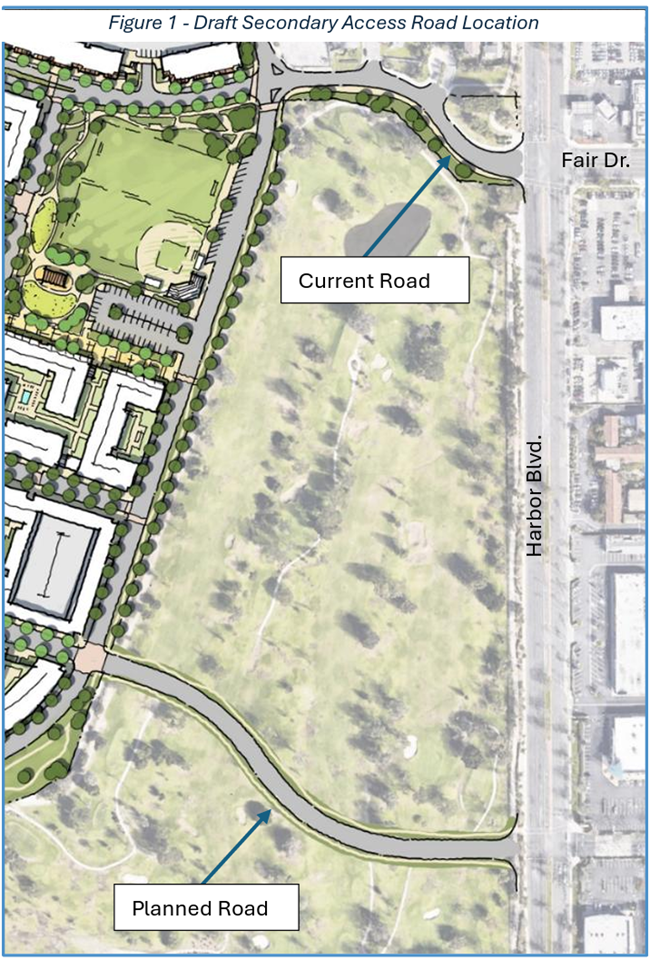

Comments